IO Transcript: 5th year
Literary work: Who said it was simple by Audre Lorde
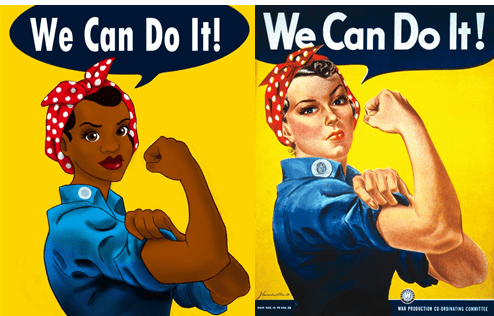
Non-literary work: Photo below
The global issue I have chosen for this IO is about race and feminism, I have narrowed it done to how race and feminism are in a race with each other. Furthermore, is it important to understand that feminism doesn’t always solve racism, civil rights had limits. You can have equality, but you can fail to understand inequality. The literary work I have chosen is who said it was simple, my main claim for this literary work is that Lorde cannot separate her women-ness from her black-ness from her lesbian-ness and that she is being forced to isolate parts of herself.
Audre Lorde discusses racism she witnesses in the feminist movement in the short poem, ‘Who said it was simple, written in 1973. The roots of which she writes in the poem, involve hundreds, if not thousands, of years of oppression denial of basic human protections because of her race, gender identity, and sexual orientation. A short description of Audre Lorde, she is a woman who was assigned female at birth and identified as such, a lesbian and black.
The non-literary work is a visual of a black and white woman fighting for their rights, however, some might say in different perspectives. In the 1970s feminist theory was criticized for ignoring racism and treating gender as a universal that encompassed the experience of all women. Until women from Asia, Africa, and the Caribbean used historical data to demonstrate that class and race were as powerful in oppressing and exploiting women. My main claim for the visual is that I see this visual as Lorde’s visual of life, she is stuck in a problematic world where she cannot identify herself as a woman, black, and lesbian. This will become clearer after my literary work analysis.
Both the literary and non-literary works define this race in their poem or visual and that is what’s linking them within this global issue.
I will be starting my analysis with the literary work, and it’s link to the global issue. During the poem, her tone is somber, but a little sarcastic.
In the first stanza, Lorde writes: There are so many roots to the tree of anger that sometimes the branches shatter before they bear, lines 1 to 3. The tree she is referring to is a symbol of the uncontrollable spread of anger. Therefore, do I assume the anger she is referring to is the exclusion she feels due to sexism and racism. Throughout the poem, many literary devices are named, in the first stanza, there are even more than the tree which is symbolism. There are many roots to the tree of anger, consist of a metaphor and personification.
In the second stanza, she talks about her experience sitting in a café, listening to women rally before they march, discussing problematic girls (girls mean black people wrong word) and what they hire to make them free. I believe Lorde is referencing the white women marching for women’s rights, discussing the non-white ‘girls’ they employ to clean their houses and/or take care of their children. Class and age intersect with race in this stanza because not everyone can afford to hire someone else to care for their children, and Lorde differentiates between ‘women’ and ‘girls’. This could be referring to age or it could be indicating to the oppressor/oppressed roles of white women and women of color. The speaker in this part appears to be bitter, mocking the women who are complaining about their employees. This part of the poem is important for the similarity of the non-literary text since the global issue that race and feminism are in a race in with each other is getting clear in this stanza.
Lorde references race again as she says an almost white counterman passes, line 8. Meaning that he’s presumably waiting on the white women before he helps a waiting brother. I want to make clear that I assume that Lorde is watching white women, even though that isn’t stated in the text itself. A lot is said within these lines. To make this clearer. Lorde identifies with the waiting brother more than the white woman she is watching. Assumingly the “waiting brother” (metaphor for an African American) was there first, but the ladies accepted the help from the counterman without noticing that. The slighter pressure of their slavery, line 11, could refer to the saying ladies first. Even while heading out to march for their rights, they ignore the rights of the waiting brother. This could also allude to the trope of the delicate white woman needing to be waited on, which can benefit white women and appears to in this situation. We see here the criticising of the speaker towards these women who may believe they are rallying for equal rights, but in reality, do not even notice when they are benefiting from the oppression of others. She is observing two individuals who she can relate to on race, but sees fellow women fighting without just cause.
Lorde concludes that she is bound to her mirror and bed, which means she cannot help seeing causes in color/ as well as sex. Lorde cannot separate her oppressions, black, woman, and lesbian. She is no longer the witness she is the subject; these are the things that identify her as a person. This is the link between the global issue, Lorde cannot separate this race and therefore the race will continue. She doesn’t get the slighter pleasures afforded to white women, and she wants to make clear that white women don’t notice or reject the slighter pleasures afforded to them.
To conclude the literary work and name the similarities with the global issue. All of Lorde’s social locations intersect to form her experience; she cannot separate her women-ness from her black-ness from her lesbian-ness. It sounds as though she is asked to isolate or deny parts of herself as she says, “which me”, meaning there are different parts to her. These parts of her may feel incompatible, or, more likely, inconsequential; the women’s movement wants her to focus solely on women’s rights, while the civil rights movement wants her to focus only on black rights. Either way, a part of her is denied. With such a complex identity, the equal rights liberalizations occurring simultaneously are pulling the speaker in multiple directions and she is unsure as too which part of her will endure the discrimination.
At this point, I will be starting my non-literary analysis and why it fits the global issue.
As we can vision in the photo, a black and white woman are fighting for their rights. One might say, the black woman for her civil rights and the white women for femininity. There isn’t much more to say than what I have explained in my literary work, and that is also a reason why the literary and non-literary works integrate. If we imagine that the photo is based on Audre Lorde’s life, we can see the struggle between both concepts. She wants to fight for both her civil rights and her femininity. However, since they are in a race, she cannot fight for both simultaneously, however she does want to. The main issue what is represented in the literary work and in the visual is that Audre Lorde wants to fight for both, however the women’s movement wants her to focus exclusively on women’s rights, while the civil rights movement wants her to emphasis only on black rights. Linking this back to the global issue that race and feminism are in a race I believe that has now been explained clearly to understand that the two works relate to the global issue.
To conclude my main claims. Both the literary and non-literary works express that Audre Lorde has difficulties expressing herself from several perspectives of herself. She finds it hard expressing herself from her black-ness and her lesbian-ness and women-ness, she is not sure which path of her will endure discrimination. She explains this throughout the poem which I analysed, and in the non-literary work you can visualize what Audre Lorde wants to express through the poem. Therefor combining the two works do they relate to the global issue that race and feminism are in a race with each other.
IO Transcript: 6th year
Literary work: Coal by Audre Lorde
Non-literary work: Alicia Garza Speech
The global issue I have chosen for this IO is about Identity, I have narrowed it down to how language shapes identity. The literary work I have chosen is Coal by Audre Lorde, my main claim for this literary work is that Audre Lorde breaks out the silence and speaks out about herself and how words can be used to give name to new feelings.
It also shows her struggle as an individual that is caught between the issues of feminism coinciding with race, class, and sexism, which is also known as Intersectionality. Lorde’s poem “Coal” tackles political views expressed from her experience as a Black feminist as she continues to struggle against labels and stereotypes.
Audre Lorde discusses being a “black-feminist-lesbian-mother-poet” who explores her identities with vivid themes and imagery. In the title poem “Coal” she asserts and celebrates her blackness. This poem reflects Audre Lorde’s relationship with society and herself as she understands them.
The non-literary work is a video of Alicia Garza giving a speech. Alicia Garza is a civil rights activist and writer known for co-founding the international black lives matter movement. Her speech is about that black lives do matter and she focuses on the black women community. My main claim for the non-literary work is that people say words as if black women can’t achieve things, but actually without black women many things wouldn’t have happened. Furthermore, black women have seen past these words and have achieved a lot of things. Which will become clearer during my non-literary work analysis.
Both literary and non-literary works define how language can affect someone’s life, and therefore shape their identity and that is what’s linking them within this global issue.
I will be starting my analysis with the literary work, and it’s link to the global issue. The tone is reflective. The reason why it’s reflective is that the poem illustrates the author’s inner thoughts and emotions towards her identity.
In the first stanza, Lorde writes: I, is the total black being spoken, lines 1 and 2. There is something remarkable in these opening sentences. She separates herself from the total black here, indicating that her true self is not necessarily within that total black. The word ‘black’ is returned its rightful history, which is inseparably tied to the earth. As Lorde says from the earth’s inside, line 3. The earth is a literal source of power for civilization, producing black coal as fuel. Audre Lorde uses this metaphor as fuel to create an inspiring sense of power in being black. Blackness is born from nature, as are all powerful things. She wants to express that our true self is not colored, just like a diamond it shines. The idea that there is a price for speaking as a black woman is established in the first stanza when she says: How sound comes into a word, colored. By who pays what for speaking, lines 6 and 7. I believe this a powerful statement, meaning that even her words are colored. The way people see each other also changes the way they hear each other, and it also distresses if people see you as inherently bad.
Audre Lorde continues explaining and naming words feel like an ill pulled tooth with a ragged edge, line 15, and how some words feel like passing crash of the sun, line 10, and how some words bedevil her, lines 21 and 22. These imageries indicate her struggle as a black woman and how a society with their power names someone black or white and judge them with their origin of being. Lorde uses descriptive imagery words to show the reader how she feels towards words thrown at her out of racism or sexism, giving the reader an image of how she feels towards these words. It gives the reader an image of how much these words emotionally affected her. An example would be when she says: Like a diamond on glass windows, singing out within the crash of the sun, lines 9 and 10. Lorde is exhilarating in its awareness of how language can impact someone. Words can be enough to make someone feel attacked, unsafe, or dehumanized. Words were weaponized regularly in 1960s America, especially in the south. In line 12, Lorde says in a perforated book buy and sign and tear apart. As said before words can be enough to make someone feel attacked, unsafe, etc. The words in line 9 mean that most of her life she has been called very horrible words that hurt her emotionally in her life. I believe that I can imagine that many people spit adders at Audre Lorde in this case, verbal manifestations of the violence against black people. What’s interesting is that Audre Lorde didn’t put the words that bedevil her in this poem, which signals that she refuses to give power to those words by manifesting them in written or spoken word. Words gain more power the more they are repeated, I think she knows this and uses this to her advantage.
Audre Lorde says Breeding like adders, line 17. In especially this line she is commenting on how she feels she must adopt her anger and remain silent as a woman of color who may face serious consequences for releasing the “Adders that breed in her throat.”
In the last stanza, Lorde says take my word for my jewel in your open light, line 26. Throughout the poem, Lorde refers to many non-human images such as diamonds, jewels, flames, glass windows, earth which is something remarkable. When looking back at the first two lines where she separates herself from the word black. This leads the leader to momentarily separate the word black from black people. This tactic opens up space in the imagination where the usual assumptions cannot be applied because the word has been recontextualized. Audre Lorde envisions new ways of speaking about herself, new ways of using labels, and new ways of expressing herself to others.
The title of the poem is coal. Lorde’s way of expressing her pride in being African American. Coal is a black mineral, but when put under pressure can become a diamond. In her poem, Lorde often refers to the word diamond which is the product of coal. Which means she may be coal on the outside, but she is a diamond on the inside.
Linking this back to the global issue that language shapes identity. Throughout the poem, Lorde talks about how there are many types of open when it comes to words, and by this, I can tell she is reflecting on how words can affect people and their identity. This poem is a representation of the author’s personal experiences. She was thinking of all the judgment she has received from other people. Being an African American, who was also homosexual, she has been on the receiving end of many nasty words and insults. But Lorde has never let any of this affect the ways she lived her life. Instead, she saw past the words and saw herself as coal turned into a diamond.
At this point, I will be starting my non-literary analysis and why it fits the global issue.
The non-literary works is a speech. The speech consists of a lot of repetition. For example, this is an ode to black women, because black women are magic. This is one of the most repeated lines Garza refers to in her speech, putting emphasis on black women and defining them as magic. She defines them as magic, because were it not for black women also a sentenced repeated occasionally, many things wouldn’t have happened. As she refers to lines 12 and 15, where Garza states many examples of things that wouldn’t have happened without black women. For example, there would be no underground railroads and no one to campaign against. Garza explains that people have said many hurtful and unrealistic things to black women and telling them they can’t achieve things in life. When they said she can’t, she is too young, she is too smart for her own good, she is too bold, too audacious, too persistent, she took too long, she should just give it up, she can’t succeed, can’t graduate high school, can’t graduate college and can’t graduate from graduate school, lines 24 until 28. As a black woman, Garza states that she has received many of these hurtful words, however, did not let this affect her way of living. She refers to all the things she did achieve despite the words thrown at her. In lines 30 and 31, that she as a black woman finished her degree while fighting for the rights of domestic workers and fighting for black lives all over the world including herself. Getting near the end of the speech, Garza includes a whole paragraph of black women who may have also been on the receiving end of many nasty words and insults but did not let this affect their life. Linking this back to the global issue that language shapes identity, I believe that has now been explained clearly to understand that the two works relate to the global issue.
To conclude my main claims. Both the literary and non-literary works express how words can affect someone’s identity. Eventually, it is what someone does with those words and make it either a negative influence in their life or instead of a positive, proving the people wrong. In the case of both Audre Lorde and Alicia Garza, the hurtful words didn’t negatively affect their life in the end, but they rather saw past the words and saw themselves as coal turned into a diamond or as magic.
 Liza Saaed' Blog